
A good quote describes the result, material handling and finishing. Combining machinery with manual work around obstacles often makes sense on the same site.
Five conditions that influence the method
The same area could be a simple open plot or a garden divided by walls and planting. Before choosing a method, consider vegetation density and stem size, access, gradient, ground strength and future use.
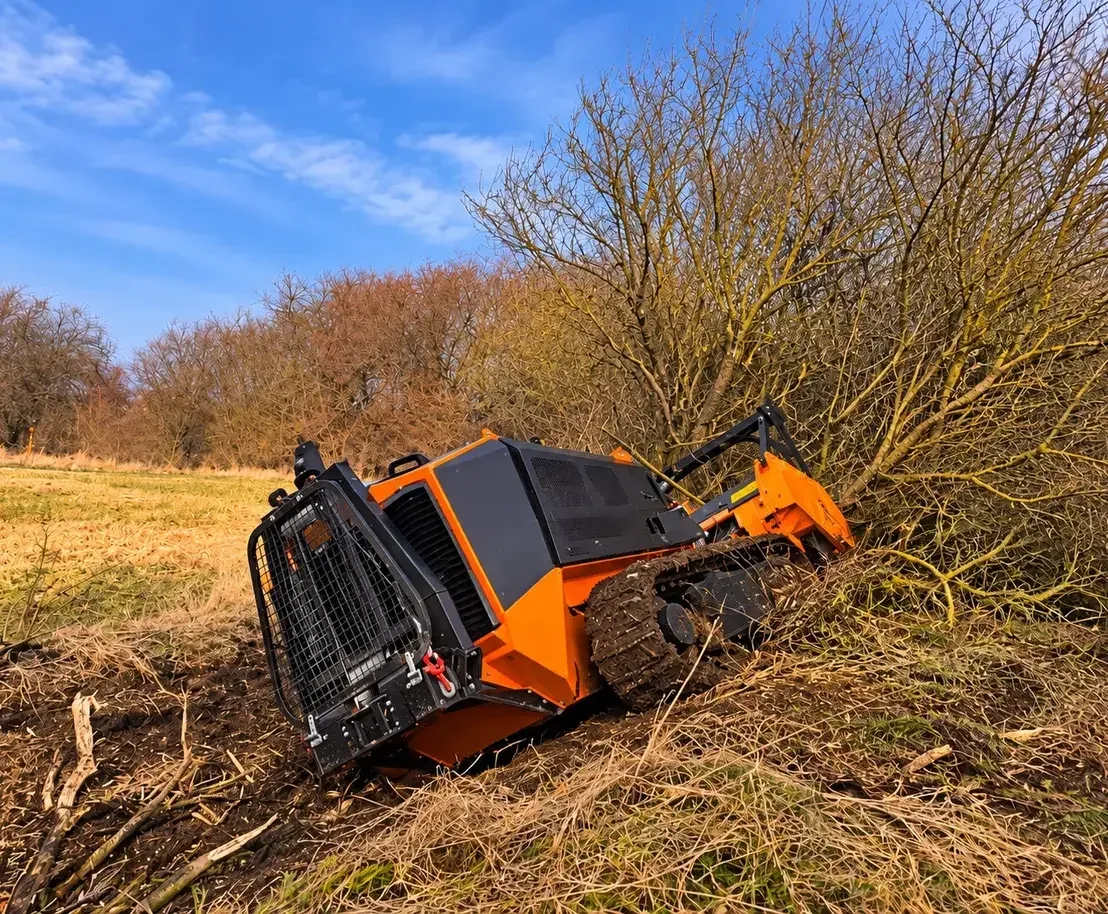
During this wildlife-corridor restoration, the gradient and space for gathering branches influenced machinery selection. Photographs of work on an overgrown slope ↗
| Condition | What usually needs assessing |
|---|---|
| An accessible, continuous area | Mechanical vegetation processing and any finishing work. |
| Fences, walls and retained planting | Manual cutting or a carefully controlled combination of methods. |
| Narrow or absent vehicle access | Alternative equipment, or manual work and carrying material out. |
| Wet ground or a slope | Ground strength, suitable timing and safe movement. |
| A future lawn or building | Stumps, roots and ground preparation as well as vegetation. |
This table is a guide. The contractor confirms feasibility according to the actual site.
When mechanical processing makes sense
On accessible land, continuous vegetation can be processed without cutting each stem separately. Where shredded material can remain, some handling and transport may be avoided. Machine transport, the narrowest entrance and unloading space still form part of the overall assessment.
Hidden wire, rubble or substantial woody material can change the approach. Promising the same saving for every site in advance would therefore be misleading. The scope of mechanical vegetation clearance must suit the growth actually present.
Manual work where precision matters
Near fences, buildings and retained trees, unwanted growth must be separated from what should remain. Manual cutting may follow mechanical clearance or be the main approach where machinery cannot reach.
The quote must include material movements too: carrying routes, branch storage and subsequent processing or removal. A lower rate that excludes handling may not produce a lower total cost.
What mulching leaves behind
Processing above-ground woody vegetation produces shredded material. By agreement, it can remain on the surface; mixing it into the soil is not automatically included. Mulching alone also does not guarantee removal of all roots or permanent prevention of regrowth.
With agreed mechanical milling, GREON can also address small stumps within the scope permitted by the vegetation and site conditions. Larger stumps, root balls and soil preparation need separate agreement. Lawn preparation also requires assessment of woody debris; construction is governed by the design.
Compare the same finished condition
- The same working boundary and area.
- Trees and shrubs to remove, with retained vegetation clearly marked.
- The scope of manual finishing, stump and root work.
- Material retained, gathered, chipped or removed.
- Transport, VAT treatment and condition at handover.
Before work, check the conditions for working on trees and shrubs. Describing the job as mulching does not by itself determine whether the work is permitted.
Frequently asked questions
Is mechanical clearance always cheaper?
No. Transport, access, terrain, vegetation and material handling all affect the total. Compare quotes for the same finished condition.
Can both methods be used on one site?
Yes. Machinery can tackle accessible areas, followed by manual work around fences, buildings or retained planting.
Will mulching leave the ground ready for a lawn?
Not automatically. Stumps, woody debris, soil and levelling may need attention depending on the conditions. Any follow-on work should be specified in the quote.
Related service
Explore the related GREON service →
Sources and further information: GREON: scope of mechanical and manual clearance. Checked on 30 October 2026.
Prepared by the GREON team. We choose the method to suit the site, access and agreed finish. AI-generated illustrations are clearly distinguished from original GREON photographs.


