
Describe the vegetation, access and known obstacles on an overgrown site. Agree beforehand whether cuttings will be mulched in place, collected or removed.
Find out what is actually growing
A view from the gate may not distinguish tall grass from brambles, young trees and old stumps. Photograph the whole area and typical patches. If you know how long it has been neglected, include that information.
For reeds, describe the setting too: a dry garden edge needs a different assessment from a wetland or waterside area. Suitable timing and any nature-conservation requirements need checking for the location.
Report hazards rather than entering them
Mark known wells, inspection chambers, holes, utilities and waste. Metal, wire and stones can affect the safe method. Do not enter obscured vegetation simply to obtain a better photograph.
- Where can people and machinery access the site safely?
- Where are the narrowest point and unloading space?
- Which areas are wet, sloping or have weak ground?
- What must be retained, and where are vehicles prohibited?
Resolve unknown conditions through a site visit or further information before arrival.
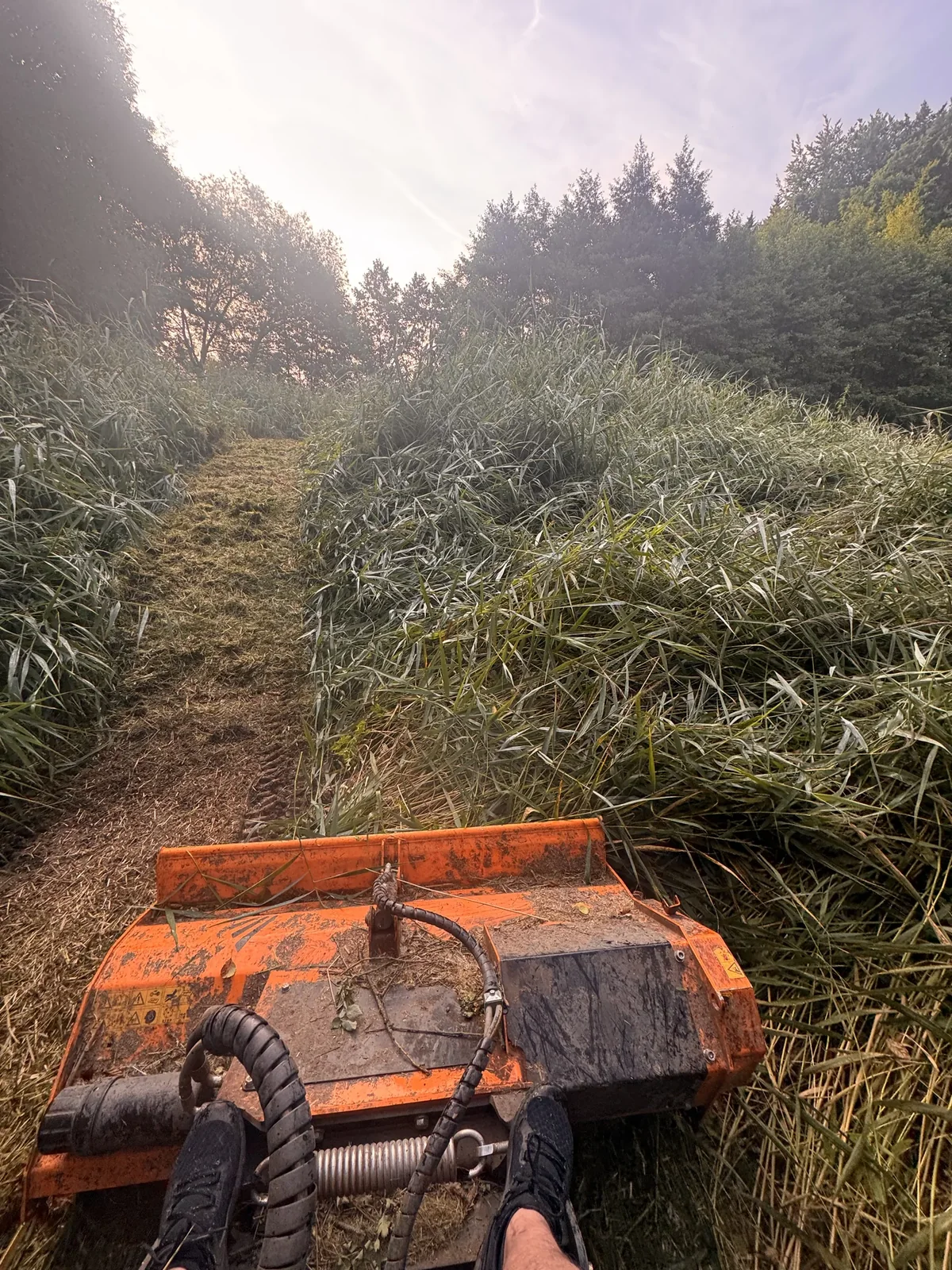
Agree the method and handling of cuttings
Should the material be mulched in place, collected or removed? Tall, dense vegetation can produce substantial cuttings, and leaving them may not achieve the required finish.
On sites with obstacles, machine work can be combined with brushcutter finishing. Slopes and wet ground need their own assessment. A quote for tall-grass and reed clearance should define both the work and the condition at handover.
Routine mowing and neglected vegetation need different work
An indicative rate in the GREON price guide is not automatically the price for every neglected plot. Density, access, slopes, waste, woody vegetation and removal requirements all affect the result.
For an initial assessment, send the location, area, photographs and required finish. Where woody growth is present, its removal cannot be treated as routine grass mowing. The scope should reflect what is actually on site.
Link the first cut to future use
Cutting reeds above ground does not necessarily remove their underground parts or prevent regrowth. To keep an area maintained long term, agree a follow-up inspection and further care according to its condition.
Frequency should reflect your objectives, growth and local conditions. An access plot may need a different schedule from a company's presentation area. Explain the intended use in your first enquiry.
Frequently asked questions
Will a standard mower handle an overgrown site?
Not necessarily. Tall grass may conceal trees, stumps and waste. The right method depends on the vegetation, obstacles and terrain.
Will one cut remove reeds permanently?
No. Cutting above ground may leave underground growth intact. Depending on the intended use, repeated care or further assessment may be needed.
Is removing cuttings automatically included in mowing?
Confirm the scope in the quote. Agree beforehand whether material will be mulched in place, collected or removed.
Related service
Explore the related GREON service →
Sources and further information: GREON: scope of tall-grass and reed mowing, GREON: indicative service prices. Checked on 30 October 2026.
Prepared by the GREON team. We choose the method to suit the site, access and agreed finish. AI-generated illustrations are clearly distinguished from original GREON photographs.


