Vegetation clearance
in the Deer Moat
Steep slopes, ground depressions and historic masonry. We managed vegetation within the Prague Castle grounds, working with heritage specialists under strict site requirements.
See the work in progress ↓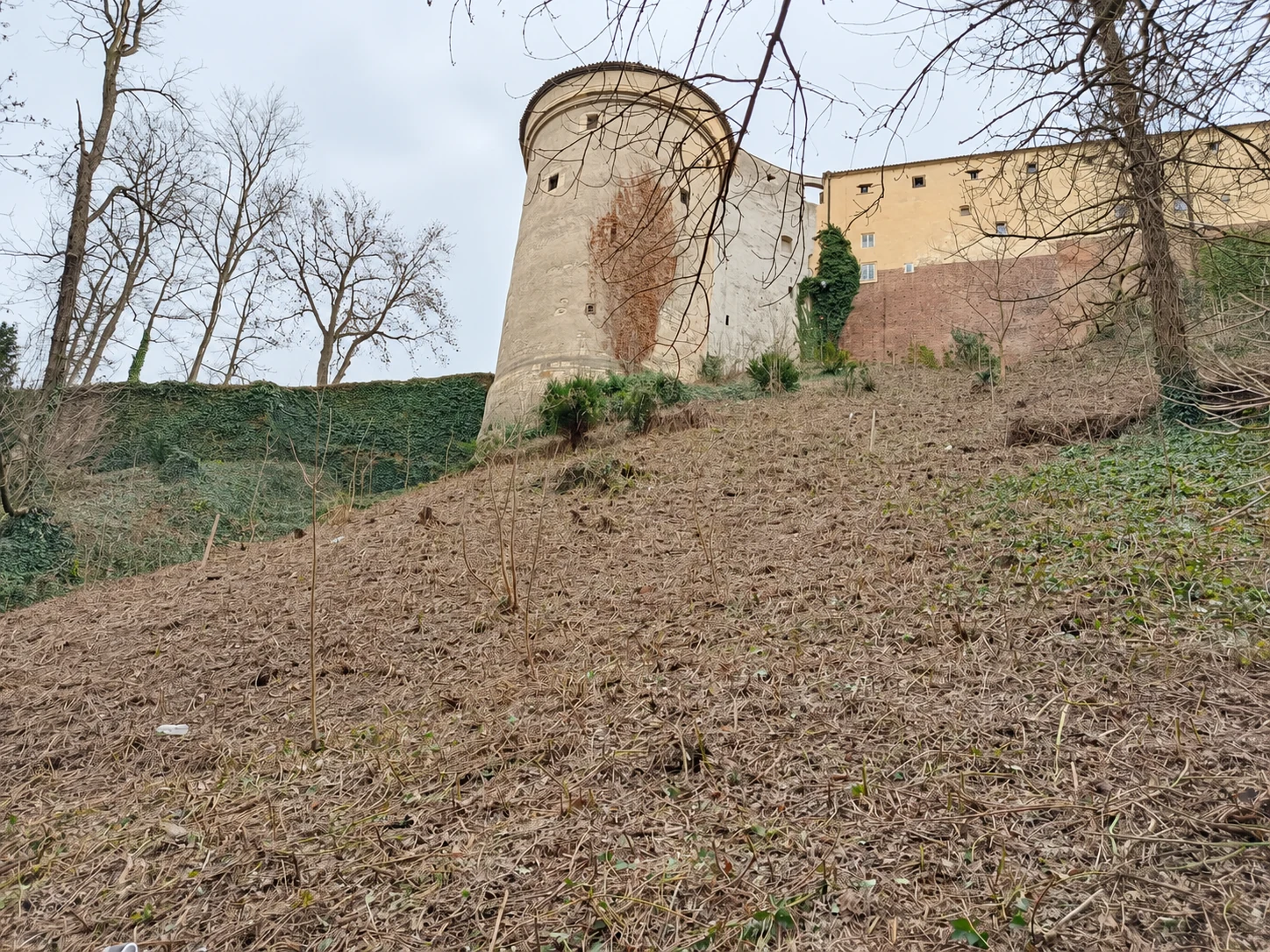
- Location
- Deer Moat, Prague Castle
- Scope of work
- Scrub, ivy and trellises
- Conditions
- Historic masonry and steep slopes
Vegetation clearance
within a historic site
The project combined removal of unwanted self-seeded trees with management of climbing vegetation on walls and trees. We worked on the Deer Moat slopes and adjoining sections near Daliborka, Na Opyši Street and the fig garden.
Within the heritage-protected grounds, we followed the prescribed working regime and coordinated each stage with heritage specialists. Methods were adapted to historic masonry, retained vegetation and available access.
The work was selective. Trees marked for retention were preserved; we removed unwanted self-seeded growth and treated designated vegetation.
The transformation of individual sections
The photographs show different project stages. Each pair depicts the same part of the grounds from different positions.
From vegetation removal to dismantling trellises
There was more than ivy on the wall. The brief also included dismantling wooden trellises anchored into the masonry.
We removed the vegetation and structures in sections. This required careful handling beside historic surfaces and ongoing coordination with heritage specialists. Removed material was gradually gathered at designated points away from the working areas.
Slopes and depressions shaped our approach
Steep slopes, uneven ground and depressions made movement and handling cut material difficult. Narrow access paths further restricted machinery use.
We adapted work organisation, team movement and material handling to these conditions. Scrub was removed with hand-operated machinery, and work on ivy in trees also required access at height.
Careful methods and team coordination helped us manage the demanding terrain. Respecting the site's requirements was as important as removing the vegetation itself.
The work in photographs
Narrow paths, material handling and retained vegetation after selective clearance.
Vegetation management and material processing
The brief also included targeted chemical treatment and mechanical removal of designated invasive growth, including knotweed and bramble.
Cut woody material was chipped. Other removed material, including trellises, was placed at designated points for the client to collect. The client arranged subsequent transport and disposal.
Have an overgrown slope or wall?
Send photographs, the location and a brief description. We will agree the scope and method around access, terrain and site conditions.
GREON GROUP's photographic record of the project.